The EU AI Act and Georgian Business: What Applies to You
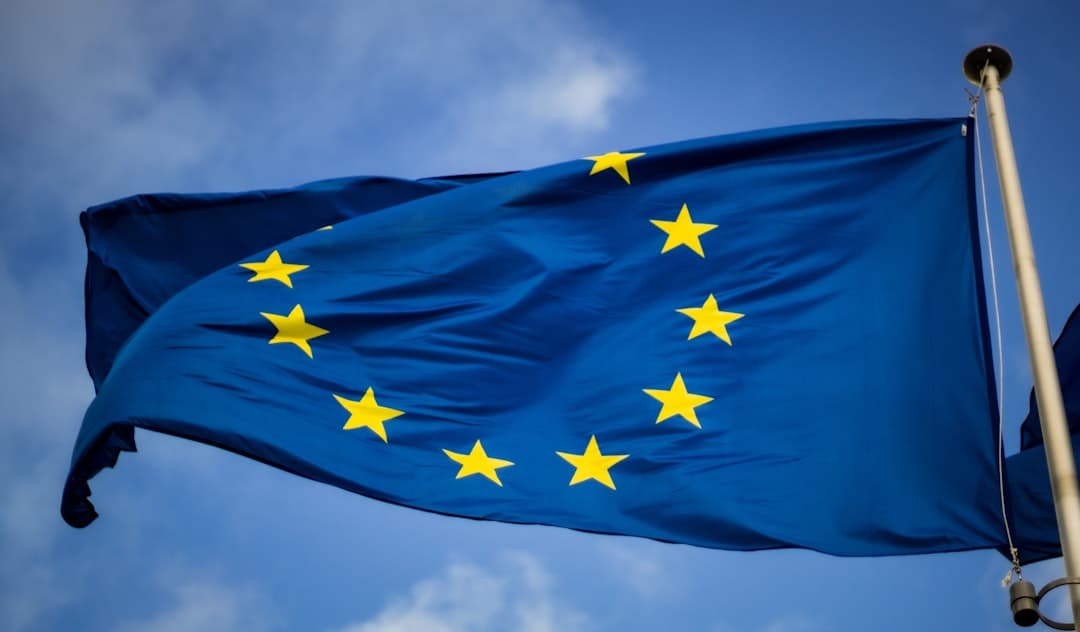
The EU AI Act is the European Union's law for artificial intelligence. It reaches a Georgian company when that company sells AI products into the EU market or processes the personal data of EU users. It sorts AI systems into four risk tiers and attaches duties to each. Customer-facing chatbots fall under a transparency duty: tell the person they are talking to a machine.
TL;DR: The Act bites only if you touch the EU market. 4 risk tiers run from prohibited to minimal. Chatbots sit in the limited-risk band and owe one main thing: a clear AI disclosure. Inside Georgia, your local data law still governs.
Most Georgian SMBs that run a Facebook page bot for Tbilisi customers are not the target of this law. The companies that need to read closely are the ones with EU clients, EU users, or an export product. If you are unsure where your AI tools land, an honest first step is a short scoping review. Our team handles that as part of AI consulting and compliance scoping, and for anything touching contracts or fines you should also retain a Georgian lawyer.
Does the EU AI Act apply to a company in Georgia?
It applies to a Georgian company when that company places an AI system on the EU market, offers it to people in the EU, or its AI output is used inside the EU. Geography of your office does not decide this. Where your users and buyers sit does. A Tbilisi shop serving only local customers usually stays outside its reach.
The practical test has three questions. Do you sell or license AI software to EU customers? Do EU residents use your AI product or chatbot? Does AI you build produce results consumed in the EU? A yes to any of these pulls you into scope, and you then map your systems against the tiers below.
The four risk tiers, in plain terms
The Act ranks AI by how much harm it could cause, then sets duties to match. Here is the structure without the legal jargon.
| Tier | What it covers | Your duty |
|---|---|---|
| Prohibited | Social scoring, manipulative or exploitative systems | Banned. Do not build or deploy. |
| High-risk | Hiring, credit scoring, medical, biometric ID, critical infrastructure | Heavy: risk management, documentation, human oversight, logging |
| Limited-risk | Chatbots, AI-generated content, deepfakes | Transparency: disclose AI, label generated media |
| Minimal-risk | Spam filters, recommendation widgets, most marketing tools | No specific obligations |
Most marketing and support automation lands in limited-risk or minimal-risk. A support chatbot is limited-risk. A spam filter or a product recommender is minimal-risk. You climb into high-risk territory when AI starts making decisions about people: who gets hired, who gets a loan, who gets a diagnosis.
What the Act requires for chatbots
A chatbot in EU scope owes a transparency duty. The person must learn, clearly and early, that they are interacting with an AI system and not a human. You meet this with a plain line at the start of the conversation. No buried footnote, no clever wording.
Three concrete moves cover most of it:
- Disclose up front. Open with something like "You are chatting with an AI assistant." A reputable build bakes this into the first message.
- Label generated media. AI-generated images, audio, or video aimed at EU users need a marker that the content is synthetic.
- Offer a human path. Let the user reach a person when the topic needs one. This also protects your conversion, since trapped customers leave.
The fine structure of the Act is tiered by severity and company size. Public summaries describe penalties scaling into the millions of euros and a share of global turnover for the worst breaches, with lighter bands for limited-risk slips. Treat any exact number you read as indicative and confirm it with counsel before you rely on it.
Your Georgian obligations do not disappear
Even outside EU scope, the Law of Georgia on Personal Data Protection (2011) governs how you collect, store, and use customer data at home. It is Georgia's GDPR-style regime. A chatbot that captures names, phone numbers, and messages is processing personal data, so consent, purpose limits, and security still apply.
Run both checks side by side. The EU AI Act asks "is this AI system safe and transparent for EU users?" The Georgian data law asks "are you handling this person's data lawfully in Georgia?" A bot can clear one and fail the other. Most Georgian SMBs spend more real effort on the local data law than on the AI Act, because the local law applies to every customer they have.
A short compliance path for an SMB
You do not need a legal department to get to a defensible position. You need an inventory and a few decisions.
- List your AI systems. Chatbot, content generator, recommender, any scoring tool. One line each.
- Mark EU exposure. Note which ones touch EU users or buyers.
- Tier each one. Use the table above. Flag anything near high-risk for a lawyer.
- Add disclosures. Put the AI line on every customer-facing bot, EU-facing or not. It costs nothing and builds trust.
- Document data handling. Write down what each system collects and why, for the Georgian data law.
This is a half-day exercise for a small company. The output is a one-page record you can hand to a lawyer or an auditor. If the inventory surfaces a high-risk system or an EU contract with AI clauses, that is the point to bring in paid legal help and a compliance scoping session rather than guessing.
Related Reading
- The State of AI in Georgian Business 2026
- AI Skills in the Georgian Job Market
- Georgia's Digital Economy and AI
- 10 AI Myths Georgian Business Owners Still Pay For
- AI Adoption Statistics for SMBs in 2026
- AI Chatbot for Business: The Complete 2026 Guide
- An AI Roadmap for a Georgian SMB Budget
- AI Employee Adoption in Georgian SMBs by 2027