By 2027, 70% of Georgian SMBs Will Have an AI Employee. What Happens to Those Who Fall Behind?
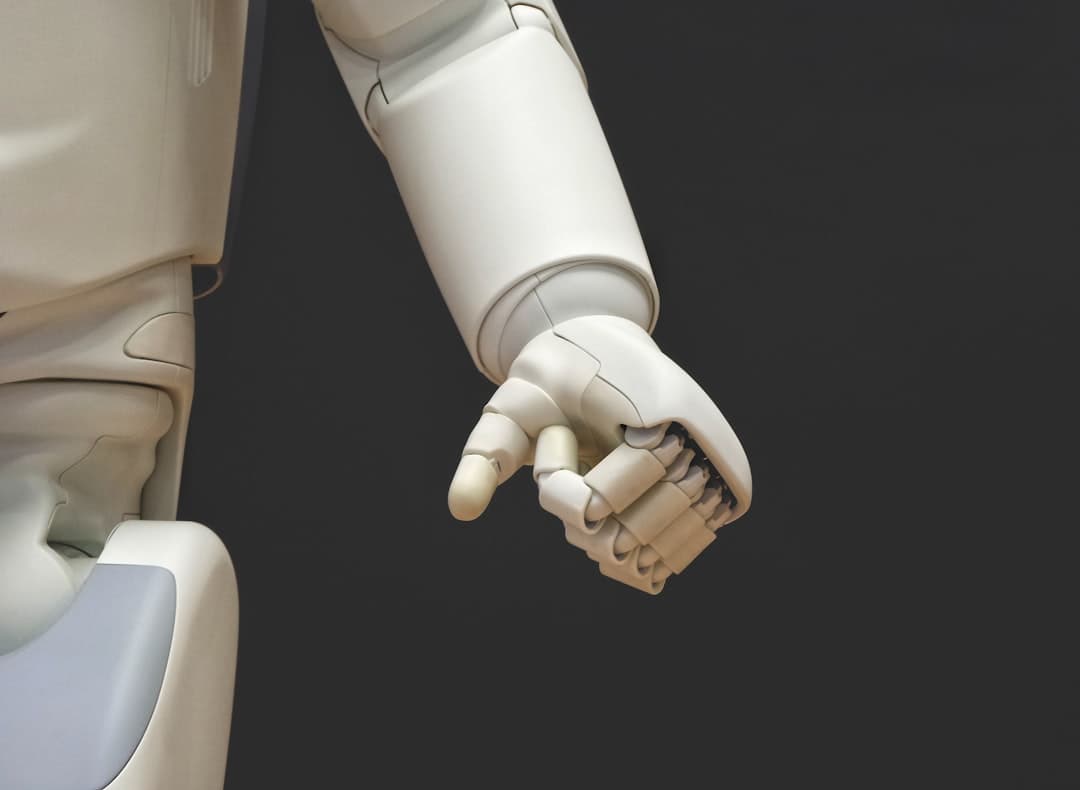
Technological revolutions happen silently for those caught up in daily operational routines.
There was a time when card payment terminals seemed like an expensive, unnecessary luxury to Georgian small businesses ("Why pay bank commissions when there's cash?"). Today, a business without a terminal is doomed to fail.
Right now, in 2026, an identical but much faster revolution is unfolding in the Georgian market: the mass adoption of AI employees (autonomous AI agents) in small and medium-sized businesses.
Based on our market research and adoption dynamics, we project that by the end of 2027, over 70% of Georgian SMBs will have at least one AI assistant on staff.
What will happen to the 30% who choose to wait? Spoiler: they won't survive the competition.
International Context: How It Happened in Eastern Europe
Georgia is not unique in this development. We are following in the footsteps of countries that started automation slightly earlier:
- The Estonia & Poland Case: By the end of 2025, about 30% of micro and small businesses in these countries integrated basic large language models into customer support and sales. Early adopters successfully cut operational costs by 25% and redirected those budgets into aggressive marketing.
- Gartner & McKinsey Research: By 2026, the global adoption of agentic AI systems grew by 45%. Businesses are moving away from simple chatbots toward autonomous systems capable of making decisions, checking warehouse inventory, and closing deals.
In Georgia, this boom is peaking right now. Local retail, restaurants, beauty salons, and the service sector are actively transitioning to AI tracks.
Why Falling Behind the AI Trend in 2026–2027 Will Be Fatal for Your Business
If you put off sales automation for "sometime later," you expose your business to three critical threats:
1. The Battle for Response Speed (Zero-Response-Time)
B2C competition in Georgia is intense. A customer choosing a tour, ordering flowers, or booking a table in a restaurant messages three companies at the same time.
- Your competitor with an AI assistant responds within 2 seconds in any language, displays the catalog, verifies availability, and sends a payment link.
- Your manager spots the message after 20 minutes (or on Monday morning if the lead messaged over the weekend).
- The Bottom Line: You are simply funding Instagram ads to gift leads to your competitors.
2. Price Pressure (The Margin Pit)
A company that deploys an AI employee reduces its support and sales payroll costs by 60–70%. They can invest the saved 3,000–5,000 GEL per month into:
- Lowering prices on their services/goods (a discount rate you won't be able to match).
- Increasing their advertising budget (they will sweep up all target traffic on Facebook and Instagram).
- Improving the product.
You will be paying salaries and taxes for manual labor while your competitor pays pennies for cloud computing.
3. Quality of Customer Experience (NPS)
Humans make mistakes, forget to enter CRM data, or have bad days. AI is always polite, remembers the history of every client, never mixes up delivery addresses, and sends receipts instantly. Customers choose predictably high-quality service.
The "Golden Window" of Adoption: 2026–2027
Right now is the golden era for integrating AI agents in Georgia:
- The cost of developing and implementing AI solutions has become affordable even for micro-businesses with turnovers starting from 5,000 GEL per month.
- The market is not yet oversaturated: by adopting AI today, you secure a powerful competitive advantage and a wow-factor with customers.
- After 2027, AI adoption will cease to be an advantage and will become a strict prerequisite for survival. You won't be leading; you will be catching up, which is always costlier and more difficult.
What Should a Business Owner Do Today? 3 Steps
- Digitize the routine: Analyze which questions your managers answer most frequently (prices, sizes, address, delivery terms, bookings). This represents 80% of their work, which can be handed over to AI in 3 days.
- Audit your CRM: Start gathering your database. The AI needs a clean source of information (product catalog, schedules, menu) to operate without errors.
- Launch a pilot project: There is no need to automate everything at once. Start with an AI assistant on a single channel (for example, just WhatsApp) and evaluate the conversion rate boost after the first 14 days.
Don't wait until 2027 when everyone is automated. Position yourself as a leader in the Georgian market today with aiNOW.
Contact us at `ainow.ge` for a free audit of your business processes.
FAQ
How does the AI employee learn the specifics of our business?
We integrate the AI with your company's knowledge base (catalog, guidelines, CRM) in 3–5 days. It learns from your actual data.
What are the requirements for integrating the automation system?
Integration is seamless, utilizing the official APIs of messengers (WhatsApp Business API, Instagram Direct) and your CRM system.