Anthropic and OpenAI Expand Strategic Partnership with US
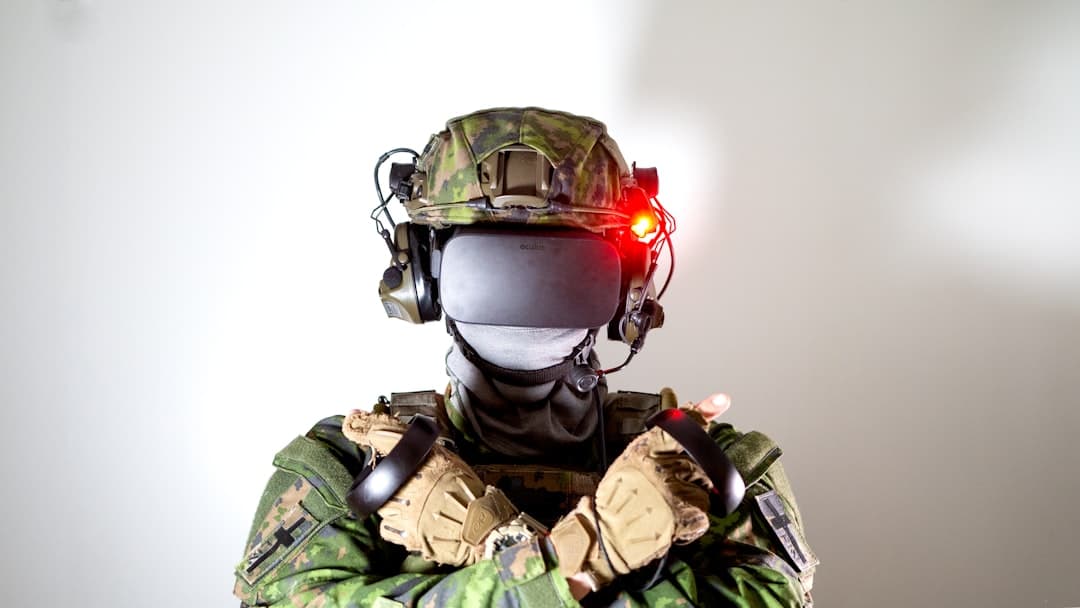
Anthropic and OpenAI Expand Strategic Partnership with US Department of Defense
Leading artificial intelligence laboratories, Anthropic and OpenAI, have officially expanded their cooperation with the US Department of Defense (Pentagon). This landmark development grants the department specialized access to state-of-the-art models for strengthening national security and maintaining a decisive technological edge on the global stage. Business AI transformation has now matured to the sovereign state level, underpinned by OpenAI's $200 billion infrastructure roadmap.
This move signals a broader shift in Silicon Valley’s stance on defense collaboration. While previously cautious, the urgent need for robust cybersecurity and intelligent decision-making systems in an increasingly non-deterministic world has made such partnerships a high priority for both the public and private sectors.
Security and AI Strategy in National Defense
The Pentagon plans to deploy Claude and GPT models for deep data analysis, complex logistics planning, and proactive cyber-defense enhancement. Similar to how Meta's Llama models detect harmful content, these defensive iterations focus on identifying threat patterns and preventing cyber-intrusions before they reach critical infrastructure. This strategy directly addresses the persistent server vulnerability challenges faced by governmental networks.
Technically, the Department of Defense relies on the massive throughput provided by Hua Hong chips and advanced Samsung semiconductors. Through secure cloud services offered by Microsoft Azure and Amazon Web Services, the Pentagon will have access to high-security, air-gapped infrastructure capable of running the latest generative transformer models.
Primary Focus Areas of the Cooperation:
- Cyber Operations: Automated identification and neutralization of sophisticated network-level attacks using real-time AI inference.
- Intelligence Analysis: Synthesizing terabytes of sensor and signal data to generate actionable intelligence reports in seconds.
- Advanced Logistics: Optimal resource management using predictive algorithms integrated with AI-driven financial and payment systems.
- Ethical Alignment: Implementing Moltbook standards to ensure all AI military applications remain responsible and human-aligned.
National Security and Global Competition
This collaboration is a direct response to rising technological parity from geopolitical rivals. The success of Alibaba's corporate agents and other strategic Asian AI initiatives has pushed the US to accelerate its own defense-AI integration lifecycle. The expanding partnership between Oracle and OpenAI further provides the Pentagon with diversified cloud choices and higher system redundancy.
Security mechanisms now include visual analysis tools, similar to MAI-Image 2, for automated satellite imagery processing and anomaly detection. Large-scale server isolation projects by Meta and Nebius provide the foundational standards for protecting high-stakes government data from external interference.
Market Impact and Future Outlook: Road to 2030
Defense integration means that AI is now a cornerstone of critical national infrastructure. AI coding assistants are already helping military engineers build secure, fault-tolerant software at a fraction of the historical cost. Tools like Cursor Composer are increasingly utilized for government-contracted development in highly sensitive environments.
Experts predict that by 2028, up to 10% of the Pentagon’s budget will be directed toward AI-centric R&D. Technologies like OpenAI's Sora and advanced simulation models will enable tactical planning with unprecedented accuracy. The recent strategic shifts by OpenAI and Anthropic all point toward the defense sector becoming a primary growth engine for the next decade of AI development.
This integration also extends to autonomous coding environments like those developed by xAI, which are being adapted for rapid software prototyping in signal intelligence (SIGINT) operations. By leveraging next-generation HBM3E memory from Samsung and AMD, these military AI systems can process multi-modal data streams—from audio intercepts to high-resolution visual feeds—with zero latency. The goal is to move beyond simple data synthesis toward "Predictive Operational Reflex," where the AI can anticipate hostile maneuvers based on subtle environmental and digital shifts.
Furthermore, the collaboration includes the development of "Resilient AI Swarms," which can maintain functionality even if parts of the global AI infrastructure are compromised or physically attacked. This transition toward decentralized, hardened AI systems is the final stage of modernizing national defense for the 21st century. The era of "Static Strategy" is over; it is being replaced by "Dynamic Algorithmic Maneuvering" where the speed of compute becomes the ultimate factor in global stability.
Looking even further, the development of "Edge-AI Battlefield Nodes" will allow individual units to carry quantized versions of these models on portable, mission-hardened hardware. This ensures that even in electronic warfare environments where satellite links are severed, the AI's cognitive support remains active and autonomous. The move toward "Cognitive Sovereignty" is now the top priority for the modern state, as the boundary between digital and physical security continues to dissolve.
Frequently Asked Questions
What is Claude and how is the Pentagon using it?
Claude is an AI model from Anthropic utilized by the Pentagon for large-scale data synthesis, classified report preparation, and internal logistics optimization.
Is it risky to use generative AI in national defense?
While risks exist, the models are deployed in air-gapped, isolated environments with redundant security layers and rigorous ethical filtering to minimize vulnerabilities.
Will AI replace human military decision-makers?
No. US policy and corporate ethical codes require a "Human-in-the-Loop" (HITL) for all significant actions. AI acts as a sophisticated cognitive amplifier, not a replacement for human command.
How does the Pentagon protect sensitive information shared with AI?
By using private instances on government-owned cloud servers where the AI is physically disconnected from the public internet and no data is used to train public models.
Who are the main competitors in the Global AI-Defense race?
China and Russia are the primary competitors, both aggressively integrating their own LLMs (such as Qwen and Baichuan) into their military command and control infrastructures.