AI-Personalization 2.0: How Hyper-Segmentation on the Fly
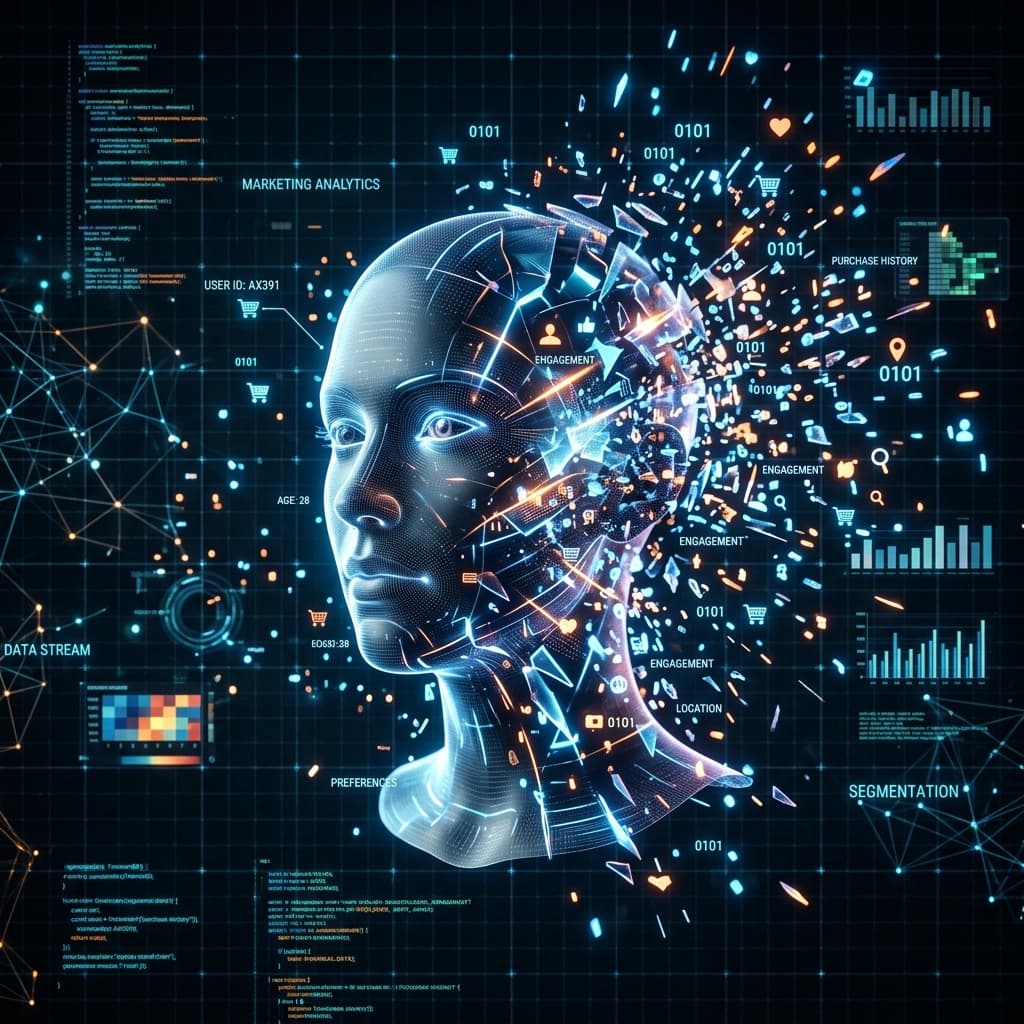
The Shift: The End of the "Persona"
In the modern marketing ecosystem, the concept of the "Customer Persona" has officially broken. A recent analysis of mid-market e-commerce brands revealed that campaigns targeting broad personas (e.g., "Urban Millennials interested in Fitness") saw a 45% decline in engagement over the last 18 months.
Consumers have developed total immunity to generalized messaging. The market has shifted from mass broadcasting to algorithmic individualization. If your brand is still showing the exact same landing page to every visitor, you are leaving the majority of your Lifetime Value (LTV) on the table.
The Context: The Limits of Static Segmentation
For years, personalization in marketing was a logistical illusion. It consisted of taking a database of 100,000 emails, dividing them into four static segments based on past purchase behavior, and sending four slightly different versions of the same newsletter.
This is not personalization. This is categorization.
The problem with categorization is that it assumes a user's intent is static. If a customer buys a pair of running shoes, the CRM categorizes them as a "Runner." For the next six months, the brand bombards them with ads for running gear. But what if they bought the shoes as a gift? What if they injured their knee the next day and are now looking for recovery equipment?
Static segmentation relies on historical data to predict future intent, but it moves too slowly to capture the nuance of the present moment. The human bottleneck in creating hundreds of tailored variations meant that true 1:1 personalization was economically impossible.
The Deep Dive: Generative Personalization on the Fly
AI-Personalization 2.0 changes the fundamental architecture of the user experience. Instead of pre-rendering four versions of a page, the system uses Agentic AI to generate a unique experience at the exact moment the user clicks the link.
Here is how the dynamic generation cycle works:
- The Intent Capture (Milliseconds 0-50): When a user lands on your site, the system instantly analyzes the referring source, the time of day, the device, geographical location, and any available zero-party data (like previous interactions with your AI chatbot).
- The Semantic Matching (Milliseconds 50-150): The AI queries your product vector database. Instead of just matching keywords, it matches semantic intent. If a user arrived via a search for "quick healthy dinners for kids," the AI knows the underlying intent is "speed" and "family health."
- The Generative Assembly (Milliseconds 150-400): This is the breakthrough. The AI does not fetch a pre-written page. It generates the headline, rewrites the product description to highlight "speed" and "health," and dynamically re-arranges the image gallery to show families instead of solo athletes. It creates a bespoke landing page that exists solely for that specific user, in that specific session.
At aiNOW, we implement systems where the website itself is fluid. The hero image, the value proposition, and the call-to-action button color are not hardcoded; they are variables determined by the AI based on the highest probability of conversion for the individual looking at the screen.
The Implications: The LTV Multiplier
The business impact of shifting from categorization to generative individualization is immediately visible in the financial metrics, specifically Customer Lifetime Value (LTV) and Customer Acquisition Cost (CAC).
- Decreasing CAC through Relevance: When an ad dynamically adjusts its copy to match the exact search query and demographic profile of the viewer, click-through rates rise. Higher CTRs lower the cost-per-click on platforms like Meta and Google. Relevance is the ultimate algorithm hack.
- Tripling LTV via Predictive Upselling: Static "People who bought this also bought..." widgets are obsolete. AI-Personalization 2.0 analyzes the specific combination of items in a cart and generates a custom bundle offer with a unique discount, explained with dynamically generated text explaining exactly why these items work perfectly together. This drives average order value up by 30-40% per transaction.
- The End of A/B Testing: Traditional A/B testing is dead. You no longer test a red button against a blue button to see which wins 51% of the time. The AI shows the red button to users who respond to urgency, and the blue button to users who respond to trust signals. Every variant wins for its specific audience.
The Takeaway: Stop Guessing, Let the System Render
My analysis of the current digital landscape is that brands are wasting millions of dollars trying to out-guess their customers. They pay analysts to build complex cohort models that are outdated the moment they are published.
The future of marketing does not belong to the brand with the best customer personas. It belongs to the brand with the most fluid infrastructure.
Stop trying to put your customers into boxes. Start building a system that molds itself around the customer. When the interface adapts to the individual in real-time, you stop selling to a demographic, and you start solving a problem for a person. That is how you triple your LTV.
Are you ready to turn your static website into a dynamic generative engine?
FAQ
Does generating pages on the fly slow down the website?
No. Modern edge computing combined with ultra-fast LLM APIs allows generative assembly to happen in under 400 milliseconds. The user perceives it as a standard, instantaneous page load. We ensure Core Web Vitals remain at 98+.
How does this work with privacy laws and cookie deprecation?
AI-Personalization 2.0 thrives in a cookieless world. Because it relies heavily on immediate context (time, device, referring URL, immediate click behavior) rather than long-term tracking cookies, it operates perfectly within strict privacy frameworks like GDPR. We optimize for the *session*, not the *identity*.